Tuesday, September 25, 2012

Strictly Plumtonic Wine and Mead: more photos

Here are some more pictures from making plum wine, again courtesy of Kierston:

Kathryn and I are crushing some plums (and drinking Carnot Cabernet):


A really nice close-up of the plums from Kathryn's tree:


Me covered in plum pulp:


Kathryn, me, and Kierston crushing more plums:


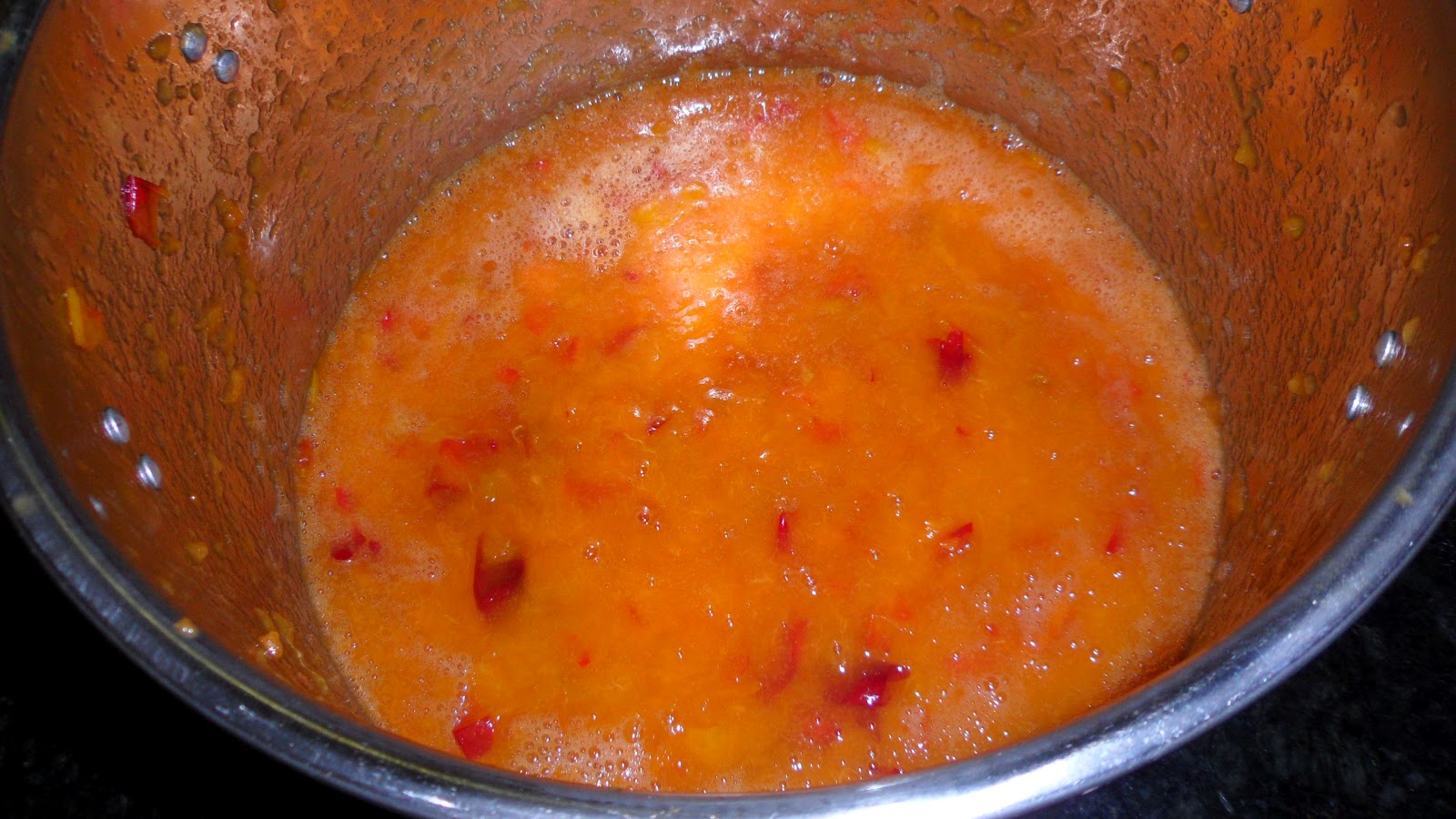
Here's what seven pounds of pulp looks like:

Carnot Cabernet: More photos from the vinification

Throughout the Carnot Cabernet fermentation process, Kierston has been taking some awesome pictures. Here's a few of the best.

Me adding the concentrate to the fermenter for the first time:


Forrest checking the specific gravity of the concentrate:


Close-up of the yeast added to the juice concentrate:


The oak float:


Racked to the carboy for secondary fermentation:


Forrest adding a stabilizer to the wine:


The wine degassing:


Gryphy, Burdell Cellars' mascot, keeping her watchful eye on the wine as it fines and clarifies:

Thursday, September 20, 2012

Mini-Mead: A Lesson Learned

Last month, I took care of Forrest and Kierston's cat while they were away for a week. As a thank-you gift, they gave me this amazing "redneck wine glass," which is in fact a mason jar attached to a stem. I decided to use it to pursue a little side project, Oak Barrel's "mini-mead" recipe. It's two parts clover honey to one part water, with a little acid to liven it up. I used some leftover yeast and yeast nutrient from our plum wine.

Here's what it looked like when everything was mixed together. The mason jar has a tight seal, which prevents contamination but builds up pressure easily. Unfortunately, I didn't have the luxury of an airlock, which meant I had to vent every day, then seal it again, shake to mix up the yeast and gas, then vent again for good measure.


After keeping up that protocol for a few weeks, the foaming kept getting stronger every time I shook my mini-mead. That's a good sign--it means the fermentation is working--but it also means the vessel was getting more pressurized. So when I took a trip to Boston to visit Steph, I had to choose between sealing the container and risk breaking it (and getting a mead puddle on my carpet) or leaving it open a crack and risk contamination. I decided losing a batch of mead was worse then losing my awesome redneck wine glass...

...and when I came back, it was brown and nasty. My glass was intact, fortunately, but my batch of mead was sadly ruined. Lesson learned: buy an airlock for your fermentations.

Sunday, September 9, 2012

"Strictly Plum-tonic" Plum Wine and Mead

In between bottling our Carnot Cabernet and waiting for our batch of Grenache grapes to show up, we embarked on a side project: a "plum tonic" wine and mead. Our friend Kathryn has a plum tree in her backyard, and by early August, the fruit had become so ripe it was literally falling off the tree.


So we picked a whole lot of plums.


A few days later, we crushed around 7 pounds of plums. We planned to use about half for a plum wine (adding sugar) and the other half for plum mead (adding wildflower honey). Here's what 7 pounds of plums looks like, crushed and pits removed but with skins and pulp still in there.


We added some boiling water to bring the total volume up to 2 gallons. The water helps to draw remaining juice off the skins and sterilize the batch.


A day later, once the batch had cooled back down to room temperature, we used a strainer to filter out the remaining skins and pulp. Here's what it looks like once it was clarified a bit.


Next, we measured out 3.5 pounds of sugar and honey for the wine and mead batches.


Then, we mixed together the clarified plum juice and the sugar...


...and put a gallon of each into a glass jug, along with the usual yeast and nutrient, for fermentation.


We did it as scientifically as possible, making each batch identically except for using honey in one and sugar in the other, so it'll be interesting to see how they turn out. We ended the primary fermentation a few days ago, racking to new jugs and discarding the yeast and remaining plum sediment. After a few more months of fermentation, the mead and wine should be ready to drink, perhaps a lovely winter beverage if everything works out like we're hoping.

Sunday, August 19, 2012

Tasting Notes: Burdell Cellars 2012 Carnot Cabernet

If you missed the production steps for our first wine, you can read up on its primary fermentation, racking and secondary fermentation, degassing and clarifying, and bottling.

We made this wine from concentrate to introduce ourselves to the winemaking equipment, process, and terminology. Our winemaking kit from Oak Barrel came with a choice of grape juice concentrates, and we picked Cabernet Sauvignon--it's a wine we all like and one we figured would be pretty tough to mess up.

To our delight--and, admittedly, surprise--the wine actually tastes pretty good! We named it "Carnot Cabernet" after the thermodynamic concept, because we're all chemical engineers and into alliterative names. While the wine is still very new, and its flavor profile will undoubtedly change in the few months it's in bottles, we tasted some of it now to get a baseline of its flavor.

Carnot Cabernet is light for a Cabernet Sauvignon, in terms of its color (actually a very pleasant and clear red), tannins (nearly imperceptible), and alcohol content (estimated 10.5-12% by volume). It has aromas of red fruit, notably cranberry and strawberry. It's somewhere between dry and off-dry, with a pleasant level of sweetness that's neither too astringent nor cloyingly sweet. The finish is smooth, and the overall taste is nowhere near as sour as we feared it might be based on "accidental" taste tests throughout the fermentation process.

For now, our Carnot Cabernet is easy to drink but not very complex, though we hope some additional flavors will emerge by the next time we try it.

If you're interested in a taste, Burdell Cellars would be happy to arrange one!

"Warm-up" Wine Step 4: Bottling

After a few weeks clarifying and further degassing, our concentrate wine was finally ready to bottle!


First, we racked to the (sanitized) fermenter one more time. Here's why:


Apparently, the fining and clarifying steps we did a couple of weeks ago worked, because all this sediment was left over in the carboy. From the fermenter, the clarified wine was ready to bottle. Forrest and Kierston (with a little help from their friends) got thirty bottles together, washed them, and got them ready to add our wine. They're not all Bordeaux bottles, which would be most appropriate for a Cabernet (we also have Burgundy and Alsace and even a Champagne bottle), but for a first effort, we took what we could get.


We used the same auto-siphoner that we've been using to rack the wine to put it into the bottles...


...and topped off the bottles after siphoning into them to leave a little space for the corking. Too much space, and the wine can oxidize; not enough space, and it's impossible to get the cork in the bottle.


Actually, it was sort of impossible to get the corks in the bottles until Kierston figured out it was much easier after soaking the corks in warm water. Here's Forrest hand-corking a bottle.


 And here's a bottle following corking. The wine actually has a really pleasant red color!

 
 All thirty bottles, filled and corked! We let the bottles sit upright for a few days to let the corks expand to the bottle...


...then after a few days, laid the bottles on their sides in the classic "pyramid" stacking scheme to prevent the corks from dehydrating.


The wine will continue to mature in these bottles for up to a few months, and we'll be tasting throughout.

Monday, August 13, 2012

Winery Review: Foppiano Vineyards

My parents were in town last week, and we always enjoy taking trips to wine country when they visit. We've covered both Napa and Sonoma over the last few years, so this time around, we hit up the Russian River Valley. It's a section of Sonoma County with a bit of a cooler climate, known mostly for its Chardonnays and Pinot Noirs. (This is not my picture of it, but it would be a beautiful place to visit in the fall.) Having no real idea where to go, we drove around the Healdsburg area aimlessly for a few minutes and finally stumbled upon Foppiano Vineyards.

Foppiano is south of Healdsburg proper, just past the Russian River itself on Route 101. It's an area that's mostly dominated by small, warehouse-style wineries. Those aren't necessarily bad--in fact, in Napa or Sonoma, they're likely quite good--but I can find them in Berkeley, and my parents can almost as easily in Georgia. It was nice to see Foppiano as a "traditional," if a little small, estate-and-vineyard style winery.

The tasting menu let us sample the winery's six current vintages: two 2010 whites, a 2010 rose, and three 2009 reds. We really enjoyed the Sauvignon Blanc, which lacked the intense acidity that varietal sometimes comes with but managed to retain a lot of its citrus fruit flavor; the Chardonnay, which follows a current trend of moving away from the "wood and butter" reputation, instead finishing with a bit of spice; and the Lot 96, an intriguing Petite Sirah blend that comes in refillable half-gallon jugs in addition to standard 750 ml bottles.

Unsurprisingly--both for the region and my personal taste in wine--my pick of the day was the Pinot Noir, fruity and not too dry. Our tasting guide claimed that it would evoke a "cherry cola" flavor. I was skeptical until I tried it, but once I did, I was sold, and I bought a bottle convinced my parents to buy me a bottle to take home.

Foppiano was small and quiet, and my family was three out of four people doing a tasting when we went. The selection is limited to a handful of typical Russian River varietals, but they're the best the region has to offer, and Foppiano does respectably with all of them. If you're in the Healdsburg area and want to try some of these cooler-climate wines in a "typical wine country" setting, then Foppiano is worth a visit.